Writing Conferences 2022 and 2023
Photos and notes from Bouchercon 2023.

Bouchercon 2023 Notes
Writing Pods—When writing, the writer needs to be insulated, away from distractions such as pets and family.
Suspense and Tension
Check out Writers’ Police Academy. Another suggestion is to attend a citizens’ academy for a local police department or sheriff’s office.
The end of chapter should have a cliffhanger, something to urge the reader to continue reading.
Look at why it was done as well as who did it.
Focus more on action than description and setting. Describe what is important, what matters to what is happening or what develops the character. No need to describe their clothing, their homes, etc. unless it adds to the story. Let the reader’s imagination fill in those details.
For new characters, describe as little as possible, just enough for the reader to be able to distinguish the new character from others. Let the reader fill in the other details.
Dialogue – short sentences are better for conflict. Conversations are good ways to explain things and show characters’ personalities. It’s a good way to differentiate characters.
Try writing the dialogue as a script and read it to yourself out loud. It helps you create more natural dialogue.
For action scenes, put emotion into the action scenes, add human behavior.
Most action fights should be over very quickly. Fights rarely last very long. However, chase scenes do last longer.
Violence must have some significance to the story.
The reader needs to care about the character in violent scenes.
Action scenes need an aftermath which adds to the story. What is the result of the action scene and how does it add to the story.
When using first person, use interior dialogues.
Love scenes—if the story needs it, okay, if not, leave it out
It’s important that two characters establish an emotional connection. This helps the reader connect to the story.
Stop making changes when they aren’t making the story better. If they simply make the story different, don’t do it.
Money Laundering 101 (two to five percent of the world GDP is through money laundering.)
What is money laundering? It’s getting cash into the financial system so that it can’t be traced back to its illegal origins.
Ship cash to jewelry stores who made fake sales and deposited the money.
Bulk cash – ship it to a foreign country, route it through hotels, money exchanges, etc. and then bring it back to the United States and declare it. It’s not illegal to bring large sums of cash into the United States, although they will want to know where it comes from and how it was obtained.
Through international trade such as buying diamonds and gold before shipping the goods to another country.
Stock market – buy shares and sell them to another person, then to a second person, then to a third and so on.
Signs of money laundering
A new cash business where the money comes from is vague or questionable.
The business doesn’t look right – lots of money but few customers.
The owner lives beyond his means. When questioned about his background, it’s vague with no details on how he made his money.
What are the parts of money laundering?
Placement—getting the cash into the bank.
Hide it in a cash business. (surfs, people who deposit small amounts of money, usually less than $9,000.00 into various banks)
Depositing it offshore
Breaking it into small wires and preload debit cards
Hawala. Giving money to person A in one country, then that person contacts person B in another country. When the person who originally gave the money to person A contacts person B, he gets the money.
Layering. Hiding the link between the money and its criminal source. It is typically moving the money around so no one can tell where it came from.
Buy and sell products.
Do international trade.
Use the stock market.
Have ownership offshore in Cook Islands or Bahamas.
Integration. Moving clean money back into the legitimate economy.
Real estate
International Companies
Securities
Gems
Racehorses
How do banks stop it?
The Patriot Act and Bank Secrecy Act require anti-money-laundering procedures and responsibility.
Financial institutions must have compliance officers.
Must follow Know Your Client rules for all clients.
Report suspicious transactions.
Submit Suspicious Activity Reports (SAR) and Suspicious Transaction Reports (STR) to Financial Crimes Enforcement Network.
STR is for currency deposits greater than $10,000.
SAR is for any suspicious activity.
Illegal to tell the customer they’ve been reported.
FinCen is part of the Treasury Department. They get thousands of SARs every week.
But what about crypto?
Buyers and sellers are encoded in blockchain.
Companies can identify patterns and subpoena information.
Other problems. Murky ownership, fraud, redemption difficulty, volatility, regulator interest, big bank fears and requirements.
Agents and Editors
Agents need to consider where the market is going. Are there too many novels of the same kind on the market.
The publishers need to know if they can reach the readers. They are in business and need to make a profit.
The publishing industry has gate keepers, people who control what gets to editors, reviewers, and publishers. If one denies you access, try another. Often the decision is based on personal preference or which markets the individual has access to. For example, an agent may be able to sell a novel, but not short stories.
Currently, Tik Tok is helping sales by reaching lots of readers. But it is the fans on Tik Tok that are reaching other readers and driving sales.
It’s important to stay connected with the writing community. Know that publishers will hold an aversion to technology against writers.
Editors and publishers like comparisons (comps) to other writers. Recommend having at least four comps that are three to five years old. An example is “My novels use humor similar to David Rosenfelt’s novels.”
Too many “he said” and “she said.” Change it up.
Audio books are making gains due to technology. Still, recommend selling to print before going audio.
The key to marketing is to stand out from others.
One trick is to give a person two books and have that person give the book to a friend.
You get out of social media what you put into it. The more you post, the better.
Make sure your website reflects you. Use color pictures, talk about your books, your experiences. Try to use professional pictures of you. Focus on what makes you special as an author. Think of three questions you want others to ask you and answer them. Try branding yourself. What makes you unique. Your website is the hub of your social media presence.
Authors should do media training.
If possible, authors should work with a publicist. Book reviews and editors work with publicists.
Authors who are being followed have interesting things to say. Try being funny. Personal details and adventures can be interesting.
Editors and reviewers do Google authors and check websites.
Reviews on Amazon and Good Reads are important. The more reviews, the more likely others will buy the book.
Newsletters are important and try to include reader magnets such as a chance to win a free book or free short stories.
Writing About the Past in Foreign Country
Many of the social issues in the novels are still relevant today. For example, problems of the poor, survival, security, women’s rights, geo-political issues, health concerns, national and border security, international commerce, employment abuse, slavery, etc.
Should write about subcultures within a society/culture.
People are afraid of change because it might hurt a person’s financial situation. (I will lose money.) Most heroes in novels challenge social norms. The protagonist is deeply and emotionally involved in society and social justice and social issues.
Historical facts don’t come alive. But research is important. Imagine yourself in that place and time to create a truth beyond the facts.
You should bring in the politics of the time and place. Think of how you would have changed history if you had been there. For example, how would you save an important historical figure.
Don’t forget foreign cultures in the story. For example, “You’re looking fat.” is offensive in the United States, but in Singapore, it’s flattering. It means you are prosperous and doing well.
The use of an actual historical event/crime is a great hook for the novel. A good example is James Clavell’s novel Gaijin, which is based on the Namamugi Incident of 1862 and the Anglo-Satsuma War.
Historical accuracy of the time and location is important.
Readers need to be able to relate to the events, the issues, and the people of the time. There should be the same kinds of issues, but different factors, such as vaccines (smallpox/COVID 19) and pollution (smokestacks/cars).
Write about the personal values of the characters, the same as today.
A lot of times really interesting events take place, but these events may not fit in the novels. For example, once a lawyer used a hot poker to prove a person in court who said his left foot was numb. Another example is the story of a horse that swam across San Francisco Bay. The author ran into the daughter of the bartender who owned the horse years afterwards.
Writing Cozy Mysteries
Cozies need a hook such as a book binder who can go anywhere and falls in love with a spy, or a middle-aged woman moving from New York to a foreign country, or an aged person who is a gardener and things happen in the garden.
Cozies need a community that can provide stories for at least three books, if not more.
Research is important. All facts must be accurate. Visit and talk to experts in the field. For example, if cooking is part of the story, learn accurate cooking techniques (microwave dinners don’t count).
Research is character driven. It helps develop characters readers can relate to.
Cozies focus on relationships, then a murder happens.
Cozy heroes are not police officers, but they do have a relationship with the police. Remember, they cannot make an arrest.
Cozies tend to lack gratuitous violence, blood and gore, sex, and profanity. There is suspense and tension, but the violence is subtle. There is romance, but no sex scenes.
Do not kill children or dogs. Readers want a mystery, not to be sadden.
Writing about Dementia and Mental Illness
These stories need characters who are care givers for those with mental illness.
Many times, these patients have a lot of rage and frustration, as well as self-doubt.
Research the particular problem for these stories.
In the novel, think about how you would handle the situation.
For people with dementia, places like grocery stores are comfortable for them because everything is always in the same place.
True story—A mother attended her daughter’s wedding, but she forgot she was there. A few weeks later, the daughter shows the mother photos of the wedding. The mother gets angry because she wants to know why she wasn’t invited to the wedding and wants to know how the daughter managed to photoshop the mother in pictures.
Be sensitive to the topic of mental illness, what harm your writing can cause to the victims and to their families.

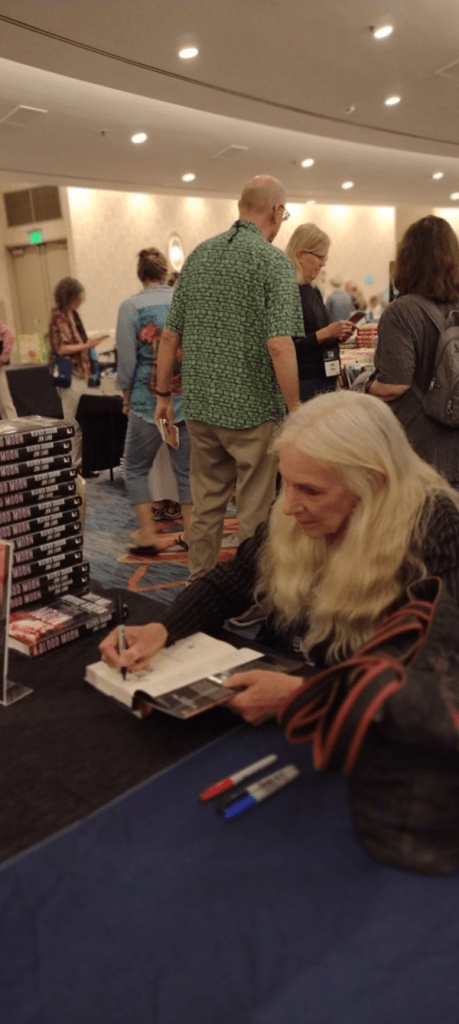
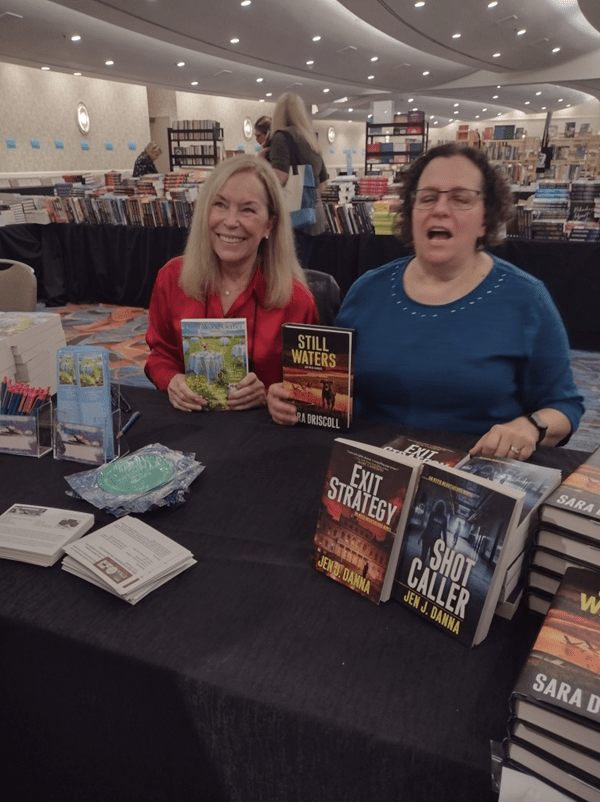
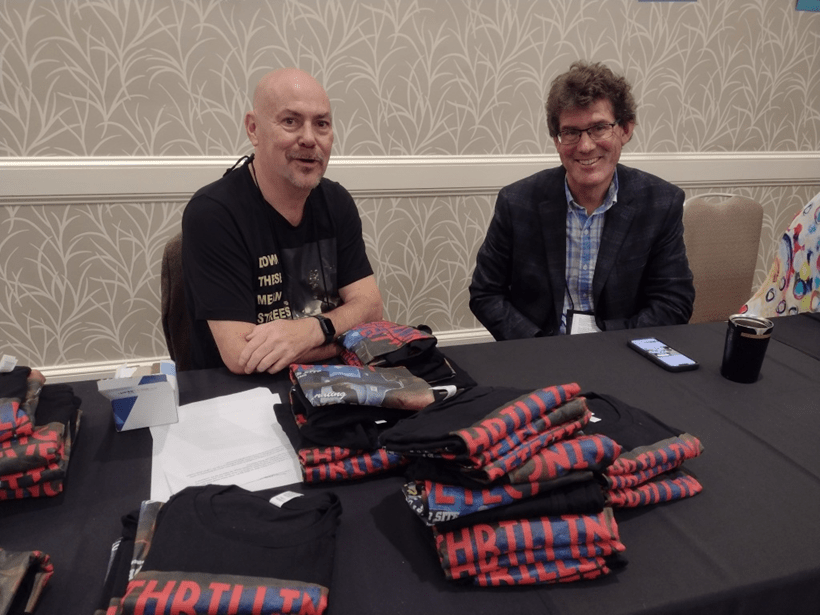
Volunteers are an important part of every Bouchercon.
Bouchercon 1

Bouchercon 2

Bouchercon 3
Bouchercon 4

Bouchercon 5

Bouchercon 6
Bouchercon 7
Bouchercon 8

Bouchercon 9
Bouchercon 10

Bouchercon 11

Bouchercon 12

Bouchercon 14

Bouchercon 15

Bouchercon 16

Bouchercon 17

Bouchercon 18
Bouchercon 19

Bouchercon 20

Bouchercon 21

Bouchercon 22

Bouchercon 23

Bouchercon 24

Bouchercon 25
Bouchercon 26

Bouchercon 27
Killer Nashville 2023
Marketing as Self-Published, Small Press, or Large Press Authors
Marketing and advertising are not necessarily the same thing.
The key is keeping your name in front of readers. The key is to let readers know the author and the book.
There are several ways to post ads. There are free Amazon ads and free Facebook ads as well as paid ads.
Several members on the panel recommended avoiding Goggle ads because you pay each time someone clicks on your ad. You pay for the clicks, and many of them will not buy your books.
If you do post on Facebook, include pictures of the book and a few words about it, and a link to the Amazon page where readers can order the book.
Also, post often. One panel member stated he posts every day. Others post once or twice a week.
Encourage readers to post reviews of your book. Reviews help get your book noticed by book sites and encourage others to buy the book.
Other places to check out are Ingram, Great Escape Bookstore, and Draft2Digital. These are places that also help promote books.
Look for book fests or places where you can promote yourself and your books.
Newsletters are extremely useful. They can include personal notes about your life, your pets, your travels, funny stories, readers’ comments, chapters from your books, back stories about your books, back stories about characters in your books, or stories from your readers. It will start out small, but over time it will increase, and help your profile in the writing community.
Offer a “reader magnet,” something free to readers who sign up for your newsletter.
Taking the Mystery out of Marketing
BookBub has ads which target readers. Hard to get on BookBub, especially BookBub Featured Deal. It’s expensive, but worth it.
Realize that you probably don’t own the copyright to traditional published books. Check on this before you send out copies of your book via social media.
When designing ads, review five things.
What kind of book is it?
Where can readers get the book?
Segment your audience. What is their education level—type of income, retired, college-educated, US vs UK, travel, or ex-pats in foreign countries.
What social media do your demographics use—look for Facebook groups.
Be sure to update your information.
When looking for a podcast, find one that has at least 100 episodes and that focuses on what you’re writing about.
When designing an ad, use an image that reflects the reader, not the book.
The Ideal Climax and Ending
The climax is not necessarily the conclusion or the ending. It is the final event and each chapter should lead up to the climax.
Dialogue is a good way to improve pacing and build suspense towards the climax. It is also a good way to show, not tell, the events of the story. Try not to repeat the same phrases.
One example is to create a situation that creates conflict such as a lawyer who is broke, but has only one client, who is dead and left a large sum of money in the lawyer’s safe keeping with instructions not to spend any of it until certain conditions are met concerning the client’s estate or heirs.
Gunshot Wounds, Knife Wounds, and Blunt Trauma Wounds
People cannot get shot in the chest and run any distance.
The best books on wounds are books dealing with tactical EMS courses and forensics.
A 22-caliber round is the most damaging of wounds because it does not exit the body, but instead bounces off the ribs and rips through several organs.
The skull is hard and many times bullets will bounce off the skull instead of penetrating it. Also, often there is a lot of blood due to blood vessels being close to the skin.
When performing first aid, do not use a tourniquet except as a last resort. Once it is applied, it does not come off until the victim is at the hospital. If released beforehand, it can cause serious injury or death due the sudden flow of unoxygenated blood to the heart and lungs.
Never point a knife at anybody. A sudden move, such as tripping or stumbling, can cause a person to accidentally stab someone. Knives are more frightening than guns.
Blunt trauma. Head wounds are the most common. Hitting someone in the back of the head is the most fatal.
When a woman must defend herself from a man, go for the throat. A person cannot breathe when his or her trachea is broken.
Falls on stairs depend on the stairs; are they metal, wood, carpeted, etc.
When a person is on the ground, he or she should keep moving and go for the eyes.
Writing about the Military
The military is a way of life, not a job. It is a demanding way of life. All military members take a physical fitness test every six months, as well as several additional training courses throughout the year.
A person’s civil rights depend on geography, not the person’s nationality. For example, if a service member commits a crime in a foreign country, off base, that person is subject to that country’s criminal justice system. This comes under Status of Forces Agreement (SOFA), which exists in every country where United States Armed Forces serve, have bases, or visit.
The Uniform Code of Military Justice (UCMJ) and the Manual for Courts Marital (MCM) are based on Federal Law. However, the UCMJ also has articles to ensure good order and discipline of the military. For example, there are articles for disobeying a lawful order and disrespect for superior officers and NCOs.
There is also the Commanding Officer’s Non-Judicial Punishment. This allows the commanding officer to punish a person in his or her command without court martial. This allows the person to leave military service under honorable conditions. A court martial, if convicted, results in a dishonorable discharge.

My Novel was a finalist for the Claymore Awards.

Lewis Allen and his wife with his novel, Mouse in a Box.

Me with my novels.
Heather Graham’s Writers for New Orleans 2023
Ask an Agent with Cherry Weiner
Ms. Weiner says she’s “an agent is a real estate agent for books.”
For query letters, limit them to one page. The first paragraph should state the word count of the finished manuscript, the genre, whether it’s a stand-alone novel or part of a series. For example, “I have finished a 76,000-word, police procedural, mystery novel, the third novel in the Media Murder Mysteries.” The second paragraph should be a blurb about the novel. The third paragraph should contain your writing credits, focusing on previously published books. The final paragraph would be the closing paragraph thanking the person for his or her consideration.
To help with marketing, think of an elevator speech, a couple of sentences describing the novel. Another idea is a tag line such as “Ghost meets Gone Girl” or “Men in Black meets Matrix.”
Remember there is no such thing as a new idea; it’s how you tell the story. Also, realize that 90% of the time, manuscripts are rejected. A writer needs to be able to handle rejection. This doesn’t mean one should give up. Learn from the rejections and keep writing.
One thing that may help is to read the acknowledgements pages. It helps you to find agents who might be interested in your work. If possible, get well-known authors to give blurbs about your books. Realize an author may do it once, but not for every book you write.
Also, learn to brag. It can be hard. I know I find it difficult to do. I served in the Marine Corps for 23 years. I now have to brag about my service. But I served with thousands of Marines, most of them as good if not better than me. I never thought of myself as any better than anyone else. However, remember this—no one will blow your horn if you don’t.
Intellectual Property and AI—Unraveling the mystery of public domain, copyright infringement and artificial intelligence.
The Copyright Act of 1976 does not cover artificial intelligence. However, federal courts are looking at Microsoft and its use of AI and what is covered under copyright laws. The problem is that technology is ahead of the laws. There is concern that AI will take over writing and replace authors. I personally doubt it because each writer has his or her own style. Also, do not confuse AI (artificial intelligence) with AGI (artificial general intelligence). If using photos for your covers, they must be in the public domain. Still, it is best to pay for an artist to make the cover or make your own. However, it is up to authors to lead any band on the use of AI in writing books.
Historical Plots: Making the Old New Again
The key to historical fiction is researching to ensure your historical facts are correct. It is recommended to read non-fiction about the historical time periods and locations being used in the story. One good source is the Smithsonian Magazine. Make sure the story works within the context of the time. For example, there were no supermarkets/grocery stores until the 20th Century. Piggly Wiggly was the first store to place packages of food on shelves and allow customers to walk up and down aisles to pick out what they wanted and then go to a person at a counter to pay for their groceries. This means grocery stores like what we have today did not exist in the Old West or Victoria England. Make sure your facts are correct. Never trust one source. Your fans do know the facts and inaccuracies will annoy your readers.
Another issue are the women of the time. While most societies were patriarchal, strong women were common. It took strong women to settle western frontiers and to challenge social norms. Also, strong women make compelling characters.
Creating Your Romantic Lead
Romantic leads no longer need to be Alpha males. You should make your heroes relatable. When describing the heroes, include good and bad traits with their looks and personality. Make the hero someone you can depend on. To quote one author (I didn’t get the name), “What’s in the glove box of their car.” The character needs to be more than superficial. The reader needs to be passionate about your heroes—make them people you want to be with or your daughter to be with.
It is recommended to stay away from abusive people. Those who beat their spouses, those who hurt animals, those who are cruel, are not hero material. The heroes don’t have to be perfect; they can be bad; but they must be redeemable.
Chapters don’t need to end with cliff hangers. You could end the chapter with an open question that makes the reader want to read the next chapter. If you hit a wall, go back to earlier chapters and sometimes the solution comes to you. Another suggestion is to keep writing and clean it up later.
Suspense, Action, and Conflict: The Prime Elements of Thrillers and Suspense
Suspense is wanting to know what happens next. For example, “I opened the door expecting a pizza, not a man with a gun.” (For the record, someone else came up with this opening line and presented it at a Bouchercon I attended. I really liked it.) The important thing is readers want to know what happens next.
Jurassic Park did a great job of using clues and foreshadowing. There were the kids in the woods at night. They see a huge footprint that has water in it. Then they feel the ground shake and you see the water in the footprint move. Next comes the sounds of something coming through the woods. Finally, the T-Rex appears. Later, the kids are in the visitors’ center eating jello. The girl begins to shake—you can see the jello shaking. The boy asks what’s wrong. They turn and see dinosaurs. Both times there is foreshadowing of danger and when it appears, the viewers want to know how the kids escape. Here the story races up to a point of danger, then the protagonist escapes to safety and gets a brief rest before the danger starts up again.
Another way of creating suspense is for the protagonist to gain control from those who have it. A good example is you are at home, sitting in your favorite chair, with a big bowl of chips and a cold beer, and you have the TV remote. Then comes in your spouse who says, “Honey, I’ve been thinking.” Immediately warning signs come on; “it’s a red alert; all hands on deck.” Then your spouse says, “Never mind. I’ll tell you later.” The worst part is your spouse takes the TV remote and changes the channel. The key is who has control. Usually, the thriller starts with the villain in control. The villain kills a victim, which brings in the hero. Meanwhile, the villain is stalking another victim. The villain knows what is happening. The hero is trying to figure out what is happening and how to stop the villain. The hero is trying to gain control of the situation to stop the villain before he or she kills another victim.
To add to suspense, one technique is discovering the hidden clue. One example is the killer throws the murder weapon into a rose garden as he flees the crime scene. Then the grandmother goes out to tend to her roses. But before she gets to where the murder weapon is, a neighbor comes up and tells her about the murder. The grandmother forgets about the roses. The next day, her dog is digging in the rose garden. The grandmother comes out to see what the dog is digging. She grabs the dog, but before she finds the murder weapon, the phone rings. Each time the grandmother almost finds the weapon, something happens to prevent it. The reader is taken to a certain point, hoping to resolve an issue, but now has to wait, wondering when will the weapon be discovered.
Conflict, such as above, adds to the suspense. Conflict centers on the ordeal of catching the criminal—the danger and difficulties the protagonist faces. Roadblocks the hero faces are individuals (bureaucrats, lying witnesses, reluctant witnesses, uncooperative people, etc.) who create problems and keep the hero from finding the villain and solving the mystery. Create characters with flaws the reader can understand and relate to. Also, other characters in the novel (sidekicks, professionals such as coroners and doctors, supervisors, politicians, red herrings, other suspects, victims, bystanders, and competitors) can add to the suspense either through misguided efforts or misleading the protagonist. Suspense focuses on discovering the key to solving the mystery and catching the villain.
Some of my tricks are varying the viewpoint and using short sentences. I will write a paragraph from the villain’s point of view. The next paragraph is from the potential victim’s perspective. Then it’s the hero’s actions and thoughts. After that, it’s the villain again, and so forth. This constant shifting helps add to wanting to know what happens next. Another trick is to use short sentences to describe what is happening. This picks up the pace of the story.
Series, No Matter the Genre: Keeping the Stories New and Fresh
One of the main factors is who are the main characters. Police officers and others in the criminal justice system are assigned to new cases. Private investigators rarely get involved in homicide cases. When they do it is a result of investigation dealing with domestic issues, property crimes, missing persons, etc. The problem with civilians is how do they become involved in cases.
Look at Murder She Wrote. Jessica Fletcher is a widowed, retired English teacher who lives in Cavet Cove, a small town with about 500 people. It ran for 12 seasons, during which time just about everyone in Cavet Cove was murdered, sent to prison for killing someone, or moved to somewhere safer, such as Afghanistan or The Ukraine. For cozy mysteries, the main character is active in the community and is contact with several different people daily. This person has a connection with at least one police officer and at least one other person who can provide assistance, such as a computer expert or a doctor. The protagonist knows the victim, the person who is mistakenly suspected of murder, and the actual murderer.
For police officers, look at shows like NCIS (the original one). Each case is different, although they are all homicides. Note that police procedures are standard. When patrol officers arrive on a scene, they first do a protective sweep to ensure they are not in any danger or if the suspect is on the premises. Then they take life-saving measures, providing first aid until paramedics arrive. After that, they work on securing the scene. Crime scene procedures are fairly standard—taking photos, diagraming the crime scene, collecting biologicals, lifting prints, collecting physical objects and physical evidence, gathering videos, etc. The investigator interviews witnesses, people who knew the victim, suspects, and gathers reports from experts (coroner, CSI, etc.) While the procedures are standard, each case is different due to the circumstances such as how was the person killed, where was the body found, what physical evidence is discovered, the people involved, and the obstacles the investigators encountered.
Private investigators do not become involved in active police cases or homicides. They do become involved in cases of embezzlement, fraud, theft, missing persons, background checks, private security matters, domestic issues, etc. These can be the crime behind the motive of a homicide. They also become involved in cold cases, usually because the police are unable to actively continue the investigation. And private investigators work with police departments. They may have antagonistic issues with certain investigators, but they do have a working relationship with others in the department.
While police departments are called to homicides, others need a call to become involved in the mystery, either through accident (witness, victim, mistaken identity, etc.) or through the hero’s job. Often, there is an initial refusal to become involved, usually due to difficulties or problems with solving the mystery. But something forces the protagonist to become involved in the case. This is usually due to a personal interest or inability to refuse the case.
The key is the way the protagonist approaches the case. The hero must solve the case in some unique or unorthodox manner (think of Columbo). Remember the motive for the crime is an important factor, as well as the relationship the villain has with the victim or victims.
Marketing—The Ins and Outs of Promotion and Branding
Social media is key. Learn to use social media such as Facebook ads, Facebook groups, Amazon ads, and BookBub. I have joined groups from high school and veteran organizations. Now my Facebook posts can reach more than 200,000 people. Focus on branding yourself and focus on the groups and ads that will apply to you. Make the time to post and interact with people on social media. Be sure to include your contact information along with blurbs about your books on social media such as Facebook Ads.
Newsletters are good. Some places that provide newsletter and promotional services are Mailchimp and Mailerlite. (I have no knowledge or experience with these sites, but others have recommended them.) The newsletters should contain information about what you are doing such as the novels coming out, what conferences or promotional appearances you are making, and any articles or stories being published. But newsletters can also contain personal details such as what you are doing (such as trip or research being done), pictures of pets or flowers, chapters from a book, and information about recent conferences. Another idea is to post which conferences you are attending and offer a free gift to people who can answer a specific question such as who is a specific character in a novel. You can also offer writing tips on grammar, plot points, character development, or some police procedures.
Lions, Tigers, and Bears! Oh My: Animal’s Contribution
Animals are key to cozy mysteries.
They must take an important role in solving the mystery.
Animals have strong personalities, and these personalities add to the adventure of the mystery.
Never kill the main animal character or a child.
Animals hear, see, and smell things we can’t. They are much better at these things than us.
Be aware that animals will contaminate a crime scene. There are basically three kinds of animals—the protector, which will keep others away from the body; the lover, which loves people and runs all over the place; and the frighten, which will hide, often taking a piece of evidence with it. Animal control is always called in to take care of the animal.
Ask an Agent with Cherry Weiner
Ms. Weiner says she’s “an agent is a real estate agent for books.”
For query letters, limit them to one page. The first paragraph should state the word count of the finished manuscript, the genre, whether it’s a stand-alone novel or part of a series. For example, “I have finished a 76,000-word, police procedural, mystery novel, the third novel in the Media Murder Mysteries.” The second paragraph should be a blurb about the novel. The third paragraph should contain your writing credits, focusing on previously published books. The final paragraph would be the closing paragraph thanking the person for his or her consideration.
To help with marketing, think of an elevator speech, a couple of sentences describing the novel. Another idea is a tag line such as “Ghost meets Gone Girl” or “Men in Black meets Matrix.”
Remember there is no such thing as a new idea; it’s how you tell the story. Also, realize that 90% of the time, manuscripts are rejected. A writer needs to be able to handle rejection. This doesn’t mean one should give up. Learn from the rejections and keep writing.
One thing that may help is to read the acknowledgements pages. It helps you to find agents who might be interested in your work. If possible, get well-known authors to give blurbs about your books. Realize an author may do it once, but not for every book you write.
Also, learn to brag. It can be hard. I know I find it difficult to do. I served in the Marine Corps for 23 years. I now have to brag about my service. But I served with thousands of Marines, most of them as good if not better than me. I never thought of myself as any better than anyone else. However, remember this—no one will blow your horn if you don’t.
Intellectual Property and AI—Unraveling the mystery of public domain, copyright infringement and artificial intelligence.
The Copyright Act of 1976 does not cover artificial intelligence. However, federal courts are looking at Microsoft and its use of AI and what is covered under copyright laws. The problem is that technology is ahead of the laws. There is concern that AI will take over writing and replace authors. I personally doubt it because each writer has his or her own style. Also, do not confuse AI (artificial intelligence) with AGI (artificial general intelligence). If using photos for your covers, they must be in the public domain. Still, it is best to pay for an artist to make the cover or make your own. However, it is up to authors to lead any band on the use of AI in writing books.
Historical Plots: Making the Old New Again
The key to historical fiction is researching to ensure your historical facts are correct. It is recommended to read non-fiction about the historical time periods and locations being used in the story. One good source is the Smithsonian Magazine. Make sure the story works within the context of the time. For example, there were no supermarkets/grocery stores until the 20th Century. Piggly Wiggly was the first store to place packages of food on shelves and allow customers to walk up and down aisles to pick out what they wanted and then go to a person at a counter to pay for their groceries. This means grocery stores like what we have today did not exist in the Old West or Victoria England. Make sure your facts are correct. Never trust one source. Your fans do know the facts and inaccuracies will annoy your readers.
Another issue are the women of the time. While most societies were patriarchal, strong women were common. It took strong women to settle western frontiers and to challenge social norms. Also, strong women make compelling characters.
Creating Your Romantic Lead
Romantic leads no longer need to be Alpha males. You should make your heroes relatable. When describing the heroes, include good and bad traits with their looks and personality. Make the hero someone you can depend on. To quote one author (I didn’t get the name), “What’s in the glove box of their car.” The character needs to be more than superficial. The reader needs to be passionate about your heroes—make them people you want to be with or your daughter to be with.
It is recommended to stay away from abusive people. Those who beat their spouses, those who hurt animals, those who are cruel, are not hero material. The heroes don’t have to be perfect; they can be bad; but they must be redeemable.
Chapters don’t need to end with cliff hangers. You could end the chapter with an open question that makes the reader want to read the next chapter. If you hit a wall, go back to earlier chapters and sometimes the solution comes to you. Another suggestion is to keep writing and clean it up later.
Suspense, Action, and Conflict: The Prime Elements of Thrillers and Suspense
Suspense is wanting to know what happens next. For example, “I opened the door expecting a pizza, not a man with a gun.” (For the record, someone else came up with this opening line and presented it at a Bouchercon I attended. I really liked it.) The important thing is readers want to know what happens next.
Jurassic Park did a great job of using clues and foreshadowing. There were the kids in the woods at night. They see a huge footprint that has water in it. Then they feel the ground shake and you see the water in the footprint move. Next comes the sounds of something coming through the woods. Finally, the T-Rex appears. Later, the kids are in the visitors’ center eating jello. The girl begins to shake—you can see the jello shaking. The boy asks what’s wrong. They turn and see dinosaurs. Both times there is foreshadowing of danger and when it appears, the viewers want to know how the kids escape. Here the story races up to a point of danger, then the protagonist escapes to safety and gets a brief rest before the danger starts up again.
Another way of creating suspense is for the protagonist to gain control from those who have it. A good example is you are at home, sitting in your favorite chair, with a big bowl of chips and a cold beer, and you have the TV remote. Then comes in your spouse who says, “Honey, I’ve been thinking.” Immediately warning signs come on; “it’s a red alert; all hands on deck.” Then your spouse says, “Never mind. I’ll tell you later.” The worst part is your spouse takes the TV remote and changes the channel. The key is who has control. Usually, the thriller starts with the villain in control. The villain kills a victim, which brings in the hero. Meanwhile, the villain is stalking another victim. The villain knows what is happening. The hero is trying to figure out what is happening and how to stop the villain. The hero is trying to gain control of the situation to stop the villain before he or she kills another victim.
To add to suspense, one technique is discovering the hidden clue. One example is the killer throws the murder weapon into a rose garden as he flees the crime scene. Then the grandmother goes out to tend to her roses. But before she gets to where the murder weapon is, a neighbor comes up and tells her about the murder. The grandmother forgets about the roses. The next day, her dog is digging in the rose garden. The grandmother comes out to see what the dog is digging. She grabs the dog, but before she finds the murder weapon, the phone rings. Each time the grandmother almost finds the weapon, something happens to prevent it. The reader is taken to a certain point, hoping to resolve an issue, but now has to wait, wondering when will the weapon be discovered.
Conflict, such as above, adds to the suspense. Conflict centers on the ordeal of catching the criminal—the danger and difficulties the protagonist faces. Road blocks the hero faces are individuals (bureaucrats, lying witnesses, reluctant witnesses, uncooperative people, etc.) who create problems and keep the hero from finding the villain and solving the mystery. Create characters with flaws the reader can understand and relate to. Also, other characters in the novel (sidekicks, professionals such as coroners and doctors, supervisors, politicians, red herrings, other suspects, victims, bystanders, and competitors) can add to the suspense either through misguided efforts or misleading the protagonist. Suspense focuses on discovering the key to solving the mystery and catching the villain.
Some of my tricks are varying the viewpoint and using short sentences. I will write a paragraph from the villain’s point of view. The next paragraph is from the potential victim’s perspective. Then it’s the hero’s actions and thoughts. After that, it’s the villain again, and so forth. This constant shifting helps add to wanting to know what happens next. Another trick is to use short sentences to describe what is happening. This picks up the pace of the story.
Series, No Matter the Genre: Keeping the Stories New and Fresh
One of the main factors is who are the main characters. Police officers and others in the criminal justice system are assigned to new cases. Private investigators rarely get involved in homicide cases. When they do it is a result of investigation dealing with domestic issues, property crimes, missing persons, etc. The problem with civilians is how do they become involved in cases.
Look at Murder She Wrote. Jessica Fletcher is a widowed, retired English teacher who lives in Cavet Cove, a small town with about 500 people. It ran for 12 seasons, during which time just about everyone in Cavet Cove was murdered, sent to prison for killing someone, or moved to somewhere safer, such as Afghanistan or The Ukraine. For cozy mysteries, the main character is active in the community and is contact with several different people daily. This person has a connection with at least one police officer and at least one other person who can provide assistance, such as a computer expert or a doctor. The protagonist knows the victim, the person who is mistakenly suspected of murder, and the actual murderer.
For police officers, look at shows like NCIS (the original one). Each case is different, although they are all homicides. Note that police procedures are standard. When patrol officers arrive on a scene, they first do a protective sweep to ensure they are not in any danger or if the suspect is on the premises. Then they take life-saving measures, providing first aid until paramedics arrive. After that, they work on securing the scene. Crime scene procedures are fairly standard—taking photos, diagraming the crime scene, collecting biologicals, lifting prints, collecting physical objects and physical evidence, gathering videos, etc. The investigator interviews witnesses, people who knew the victim, suspects, and gathers reports from experts (coroner, CSI, etc.) While the procedures are standard, each case is different due to the circumstances such as how was the person killed, where was the body found, what physical evidence is discovered, the people involved, and the obstacles the investigators encountered.
Private investigators do not become involved in active police cases or homicides. They do become involved in cases of embezzlement, fraud, theft, missing persons, background checks, private security matters, domestic issues, etc. These can be the crime behind the motive of a homicide. They also become involved in cold cases, usually because the police are unable to actively continue the investigation. And private investigators work with police departments. They may have antagonistic issues with certain investigators, but they do have a working relationship with others in the department.
While police departments are called to homicides, others need a call to become involved in the mystery, either through accident (witness, victim, mistaken identity, etc.) or through the hero’s job. Often, there is an initial refusal to become involved, usually due to difficulties or problems with solving the mystery. But something forces the protagonist to become involved in the case. This is usually due to a personal interest or inability to refuse the case.
The key is the way the protagonist approaches the case. The hero must solve the case in some unique or unorthodox manner (think of Columbo). Remember the motive for the crime is an important factor, as well as the relationship the villain has with the victim or victims.
Marketing—The Ins and Outs of Promotion and Branding
Social media is key. Learn to use social media such as Facebook ads, Facebook groups, Amazon ads, and BookBub. I have joined groups from high school and veteran organizations. Now my Facebook posts can reach more than 200,000 people. Focus on branding yourself and focus on the groups and ads that will apply to you. Make the time to post and interact with people on social media. Be sure to include your contact information along with blurbs about your books on social media such as Facebook Ads.
Newsletters are good. Some places that provide newsletter and promotional services are Mailchimp and Mailerlite. (I have no knowledge or experience with these sites, but others have recommended them.) The newsletters should contain information about what you are doing such as the novels coming out, what conferences or promotional appearances you are making, and any articles or stories being published. But newsletters can also contain personal details such as what you are doing (such as trip or research being done), pictures of pets or flowers, chapters from a book, and information about recent conferences. Another idea is to post which conferences you are attending and offer a free gift to people who can answer a specific question such as who is a specific character in a novel. You can also offer writing tips on grammar, plot points, character development, or some police procedures.
Lions, Tigers, and Bears! Oh My: Animal’s Contribution
Animals are key to cozy mysteries.
They must take an important role in solving the mystery.
Animals have strong personalities, and these personalities add to the adventure of the mystery.
Never kill the main animal character or a child.
Animals hear, see, and smell things we can’t. They are much better at these things than us.
Be aware that animals will contaminate a crime scene. There are basically three kinds of animals—the protector, which will keep others away from the body; the lover, which loves people and runs all over the place; and the frighten, which will hide, often taking a piece of evidence with it. Animal control is always called in to take care of the animal.
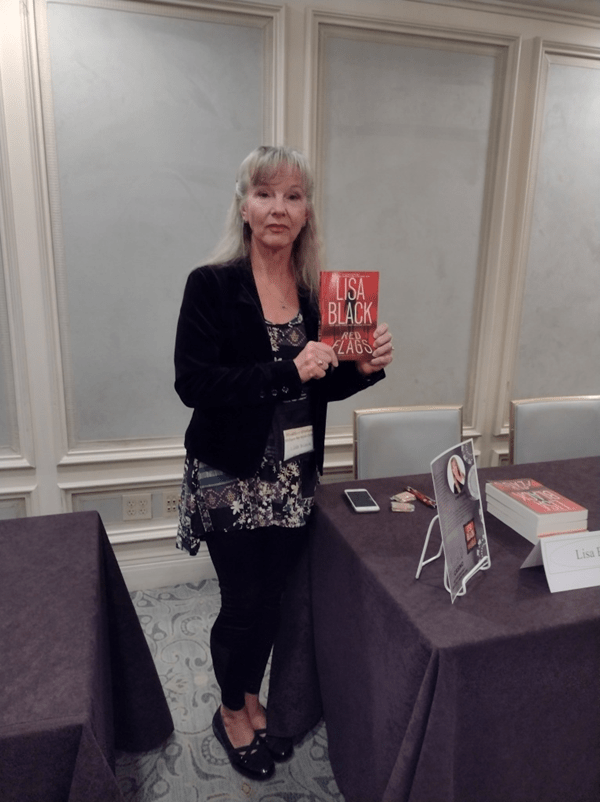
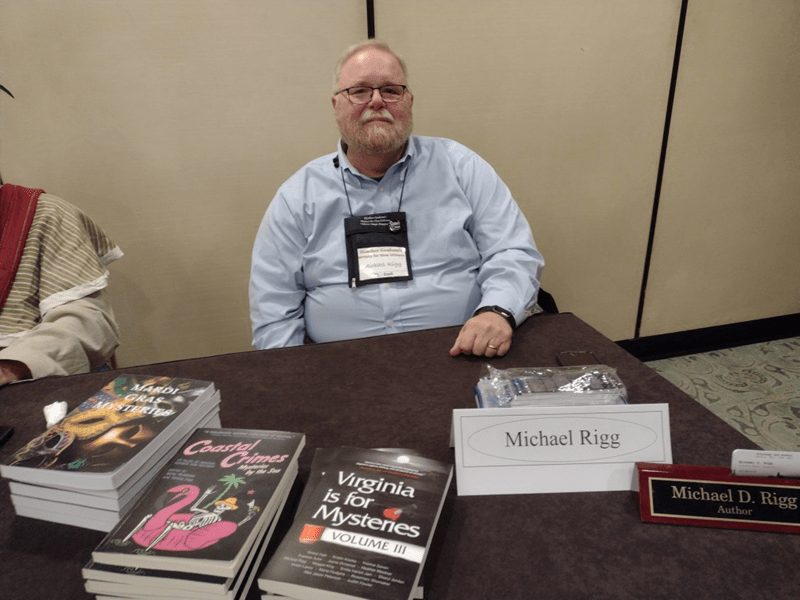
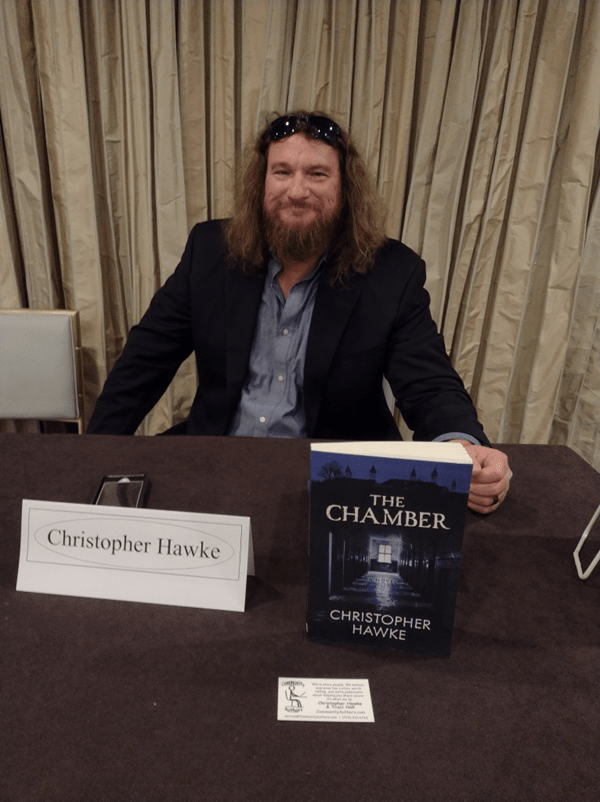
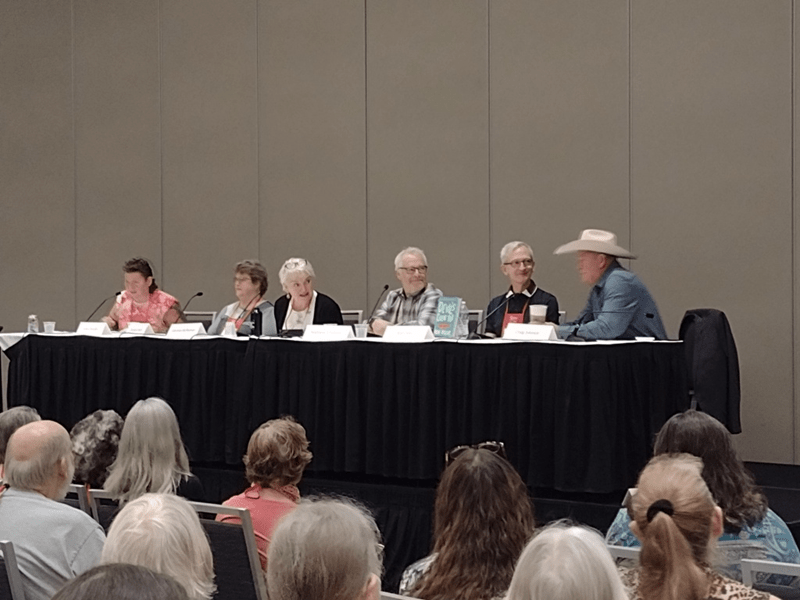
Photos of the conference.

NOLO 1

NOLO 2
NOLO 3

NOLO 4

NOLO 5

NOLO 6
NOLO 7

NOLO 8

NOLO 9

NOLO 10

NOLO 11
NOLO 12
NOLO 13
NOLO 14

NOLO 15
Bouchercon 2022 – Minneapolis
Short Cuts to Great Dialogue Panel
Check out Black Cat Mystery Magazine
Give characters different voices, different ways and vocabulary when talking.
Don’t make characters sound the same.
Use syntax with foreign languages.
Characters have tells; a word, phrase, expressions unique to them
Don’t answer questions with direct answers, imply the answer.
Kids speak differently than adults.
Use subtext, body language: e.g. “Do you think?”
Read dialogue out loud. Get others to read the dialogue.
Editing Tips Panel
Editors must really like the book.
Avoid overexplaining which makes readers stumble through the text.
Avoid using dream sequences in novels.
Investigate the publisher, look at other books they are publishing.
Julia—looking for something unique—only you can write this book.
May times the book may be published 18-24 months after submission.
Don’t explain everything—Refuse to be done.
Cut one sentence from every page.
Don’t mix tenses, past is past, present is present.
Tips from Agents Panel
Include social media in 21st century fiction, it’s part of our lives.
Add social issues such as Black Lives Matter, Pandemic, Immigration, etc.
Personalize queries to the individual. One editor likes the personal touch, and it shows you did your research.
Put in a chapter or several pages from the novel, but no attachments. With the problems of computer viruses, many agents prefer it to be added at the end of the email message.
Follow-up with queries after a month to six weeks.
It’s okay to query several agents at the same time, just be sure to let them know you are querying more than one agent.
Publishers’ Market–$25.00 a month
P.I. Tradition Panel
Looking for diversity
Idea—having victims take on the bad guys, taking the place of the police.
Social Media Panel
Post messages about books you like.
Twitter—ask author to tweet back.
Support other authors—helps build followers.
Use Good Reads—Good Reads giveaways.
Post animals
Creator economy
Editing 101 Panel
Timeline—create time for writing.
Create characters and their descriptions.
Head hopping—going from one character to another and their thoughts and points of view. Be careful with this.
Work on a daily writing habit
EFA List of editors
Editors will ask to see the manuscript first.
Police Procedures Panel
Women think differently than men. Women miss their family events, soccer games, birthdays, etc. more than men. Tend to have more empathy than men.
Talk to cops for ideas and what really happens.
Look up the president of the local/state PI Organization
Jeri Williams—former FBI agent
Michael Connely and Ed McBain have good police procedures.


 Zeid's Mysteries