The following are comments and suggestions from the panel members.
Why and How to Market Short Stories
Remember two things: to kill or not kill a character and to keep or not keep a character.
Seven Reasons for Short Stories
- Takes less time to complete
- An agent is not required for publication
- There are more opportunities to submit
- There is greater freedom to write in many genres
- There are increased opportunities for revenue
- Short stories create a community and greater chance for networking
- Short stories are easier to submit for awards and prize money
One way to increase the opportunities for short stories is to join writing circles such as Mystery Writers of America, Sisters in Crime, or local groups.
This is a business. Look for opportunities to publish short stories in anthologies, magazines, social media publications, etc.
Another resource is Publishing and Other Forms of Insanity—it is a free newsletter listing short story markets and contests.
Writing, Is It Really the First Three Pages
Yes, it is.
Chuck Sambuchino, a writer for Writers’ Digest, pointed out many agents don’t go beyond the first page unless it interests them. He recommends the first page contain some kind of tension, problem, conflict, or trouble.
At several conferences, agents ask for only the first two pages.
The setting should be clear, especially if it takes place in another time period.
Be careful of tone. Don’t create the wrong tone such as being graphically violent when the novel is a humorous mystery.
Know your audience. Avoid jargon and acronyms most people don’t know. Most cops know ViCAP (Violent Criminal Apprehension Program), but many others don’t. Even if they have heard the word, they may still not know what it is.
Start with action. Avoid too much back story and description.
Show, don’t tell. For example, “This was the fourth cigarette he lit in the past ten minutes. He kept moving around the parking lot, often looking over his shoulder, taking note of every person who walked by.” Instead of “He was nervous.”
Thrillers: The Cutting Edge
Thrillers are where the hero’s life and well-being are at stake. What are the stakes involved if the hero fails.
Several of the panelists stated mass marketing of paperback books isn’t as popular as before. E-books and audio books are becoming more popular.
Surprise yourself. If you don’t know what is next, then the reader won’t know either. Makes for good suspense.
Most thrillers involve the hero not knowing what the villain is doing and potential victims are unaware of the danger.
Several of the panelists also stated most publishers don’t really know what they want so it’s hard for writers to meet any specific demand. Therefore, they recommend writing the novel you want to write.
It’s important to stay relevant as a writer. Does the scene drive the story forward. Avoid gratuitous sex and violence if it is not necessary.
One suggestion was to write the story and do the research afterwards to ensure your facts are correct. But remember what Samual Coleridge (an English Romantic Poet) said, the “suspension of disbelief” enables the reader to enjoy fiction.
If I Could Turn Back Time, Where Would I Go
The panelists focused on advice they would give themselves if they were starting out in writing books.
They stated many people will put you down, but you need to believe in yourself. Learn to accept rejection letters and realize that many successful authors and books were rejected several times, and yet they became best sellers.
There is a need for constructive criticism and advice. Look for this, not people’s opinions.
Don’t write for a trend because by the time your book is finished and makes it to the market, that trend is gone.
Trying branding yourself. Be a certain type of writer. This makes it easier for readers to find and know you. Later, you can expand into other types of writing.
Best advice—READ. Reading books helps writers develop. Look at what you like about the book and what you don’t like. Learn from others.
Blending Genres: Paranormal, Romance, Mystery, and More
When blending genres, make sure they go together, such as a romance that has a happy ending and a mystery where they catch the criminal.
Stuff happens to people you care about, so make sure your readers care about your characters.
Use twists in the story. A good place to see this is in the old episodes of The Outer Limits and The Twilight Zone.
Panelists recommended reading books on writing and looking at story tellers. Learn to become a good storyteller. (On a personal note: this is hard unless you have the other person’s complete attention. Too many times, especially at crowded gatherings, others are more interested in what is happening elsewhere than listening to you.)
One good example of blending is the advertising on a can of sparkling water called “Liquid Death,” guaranteed to kill your thirst.
Social Media Surgery/Social Media Trends
Remember the six “wh” questions: what, who, where, when, how, and why.
What is your message?
Who is your audience?
Where is your audience?
When can you reach your audience?
How do you want your audience to act?
Why are you doing what you’re doing?
Print media, such as books, are changing to electronic media. Books are becoming E-books. It costs companies about $1.50 per pound to ship anything.
Be wary of phone farms and don’t buy followers. This will hurt you in the long run. Be aware that about 40% of Twitter (now X) followers are fake.
Work on branding—let people know what they get from you. Look at Stephen King, Heather Graham, and James Patterson—they are brands.
Post when and where you are going to be. Let people know which conferences and public events you are attending. I also recommend letting people know where you were. I’ve gotten responses from people who were in the city where I attended a conference.
Vertical pictures and videos on cell phones are more common than horizontal ones. But, horizontal pictures are better than vertical ones.
Learn how to use matrices to monitor your social media.
Develop a business page on Facebook and keep it separate from your personal page.
How to Make Your Blood Run Cold
Several panelists stated horrible deaths where the victim is completely conscious but unable to do anything to save him or herself. Some examples are being burned at the stake of drowning with one’s feet in cement.
The key is helpless situations where things are out of one’s control.
How far is too far for the reader? Each panelist had different limitations. One would not write about the torture of victims. Several agreed that killing pets and children was out of bounds. As the writer, you could tell about the incident, but don’t write about it.
Write what the reader needs to know about what is happening, but don’t get too technical or too graphic.
Try using tunnel vision and focus on the event. Don’t include side events such as the detective saw a phone at a murder scene and remembered he or she needed to call his or her mother to wish her a happy birthday.
Many writers fail to keep things real. Crime scene technicians do not arrive at a crime scene wearing dresses and open-toe, high heels.
Start with imagining the scene. If you can visualize the situation, you can write it.
Getting Inside Your Character’s Head
It’s easier to introduce characters’ thoughts and ideas in third person instead of first person. If first person, focus on characters’ actions and gestures to show emotion.
Travel and experience help writers create settings. Note how local people act, their culture, mannerisms, social norms, etc. For example, many Japanese people bow when they are talking on the phone. Take note of odd behaviors and people you meet when traveling. Another example from Japan was how popular combat boots were in a country where everyone takes off their shoes whenever they enter a home or school.
Characters should have a good side and a bad side.
Have characters do unexpected things and surprise readers.
Most characters share some characteristics with the writer. It’s good if readers can identify and relate to the characters.
Don’t forget what are the motivations of the characters’ actions?
Brainstorming as Mystery: Panelist Plot Before Your Very Eyes
The key here is “What if. . .” What if it was the brother? What if it was the mother? What if it was self defense? What if the killer did it to protect someone else? Etc.
In a first-person narrative, the focus is on the narrator’s emotions and frustrations. The narrator learns everything from others: what happened, the back story, what others did, etc.
With a third-person narrative, it’s easier to create tension, suspense, and thrills because the reader knows more than any one character in the story.
All stories are quests, trying to gain something or discover something. Think about what the reader wants to happen.
Several of the panelists wrote without any kind of outline. They write the story and then go back to edit and work out the details.
For those who use outlines, they provide a great starting point. However, even with outlines, the stories tend to take on a life of their own.
Some suggestions are:
Remember the six “wh” questions.
Create character profiles to maintain consistency in their behavior.
List clues and major events. Creating a timeline helps keep them in order. Also note who does what and who finds which clues.
Learn police procedures. Many departments have citizens’ academies where non-police officers can learn about the various departments in the agency. There is a Writers Police Academy that provides tips for mystery writers.
Most police investigations include victimology—studying the victim and why the person was targeted. This means your victim is an important character in the story.
Most novels have a secondary plot such as an interpersonal relationship or problem. Deal with it the same as you would deal with the main story line.
Listen to the Experts
Don’t submit anything until it’s market ready. Publishers and agents don’t edit manuscripts.
Do your research. Make sure the agent you contact handles the kind of material you are submitting. Check resources such as Writer’s Digest for agents who handle the kind of books you are writing.
Look for editors and agents who are in the business and know publishing. Avoid those who respond or send you friend requests on Facebook or social media. Many of them are scams.
This is a subjective business. What one person likes others may not. If one agent turns you down, try another. But listen to criticism and suggestions others provide.
When doing multiple submissions, have the courtesy to let the agents know the manuscript is a multiple submission. Also, let them know when the manuscript is off the market. It’s important to be courtesy, honest, and professional.
When connecting with an agent, remind the person where and when you met. It helps if you include a key word or event to remind the person of who you are. Remember, agents meet a lot of people. Don’t try to fool the person by lying. Many agents keep notes about when and where they meet prospective authors.
While social media is important for promoting your book, don’t worry about how many followers you have. You must have a social media presence, but there are also other ways to promote your work.
Try networking with other authors to promote each other. Set up links to others website, write reviews for their books, etc.
Another way to promote your book is to copy the cover of the book on a postcard and mail the postcards to everyone you know.
Photos from the conference

A street scene in New Orleans
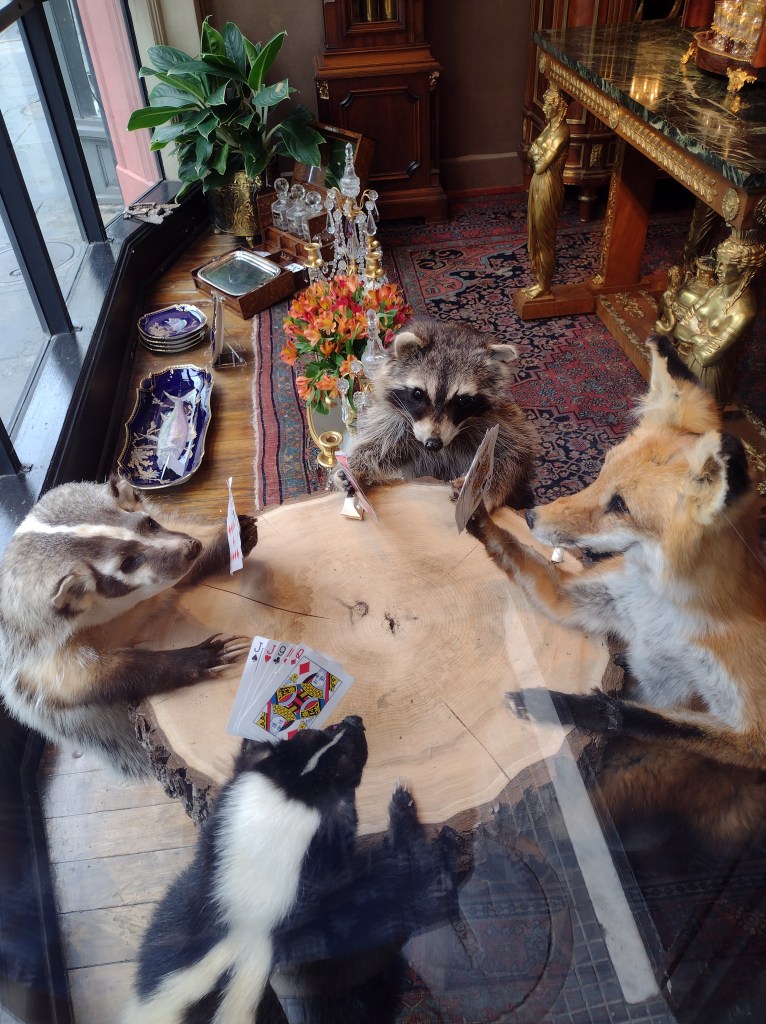
Window display in New Orleans

River view from our hotel

River view from our hotel

Ceiling in a bar in New Orleans
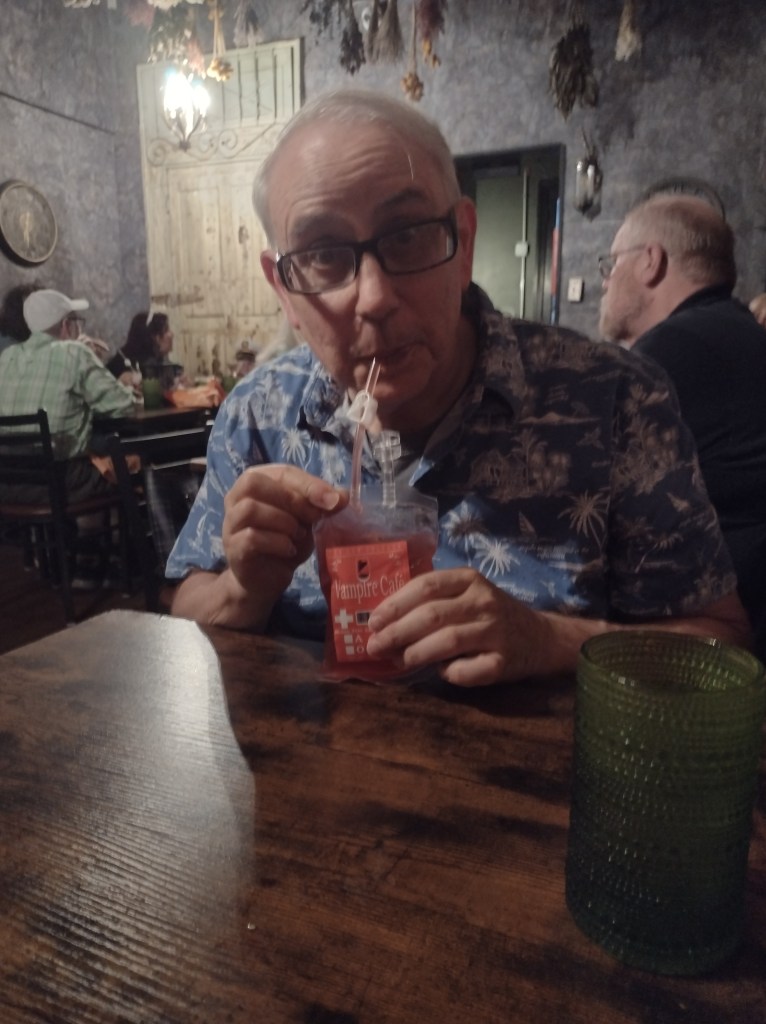
Enjoying a drink at a bar in New Orleans

Mark Zeid sitting on a panel
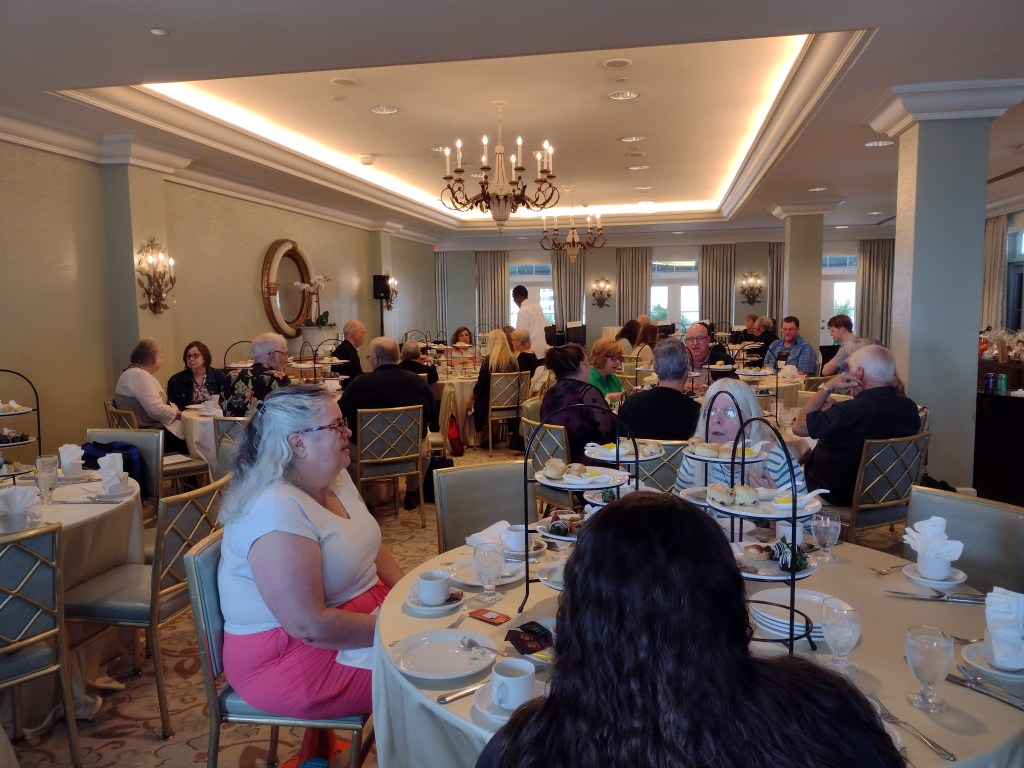
Writers for New Orleans Tea
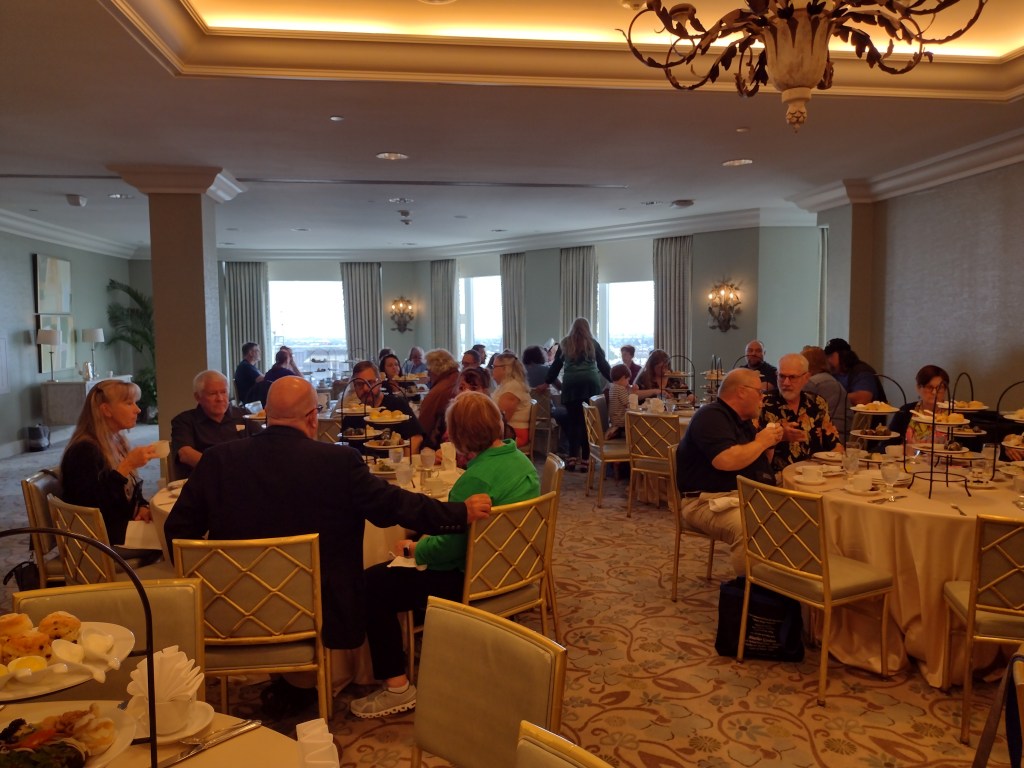
Writers for New Orleans Tea
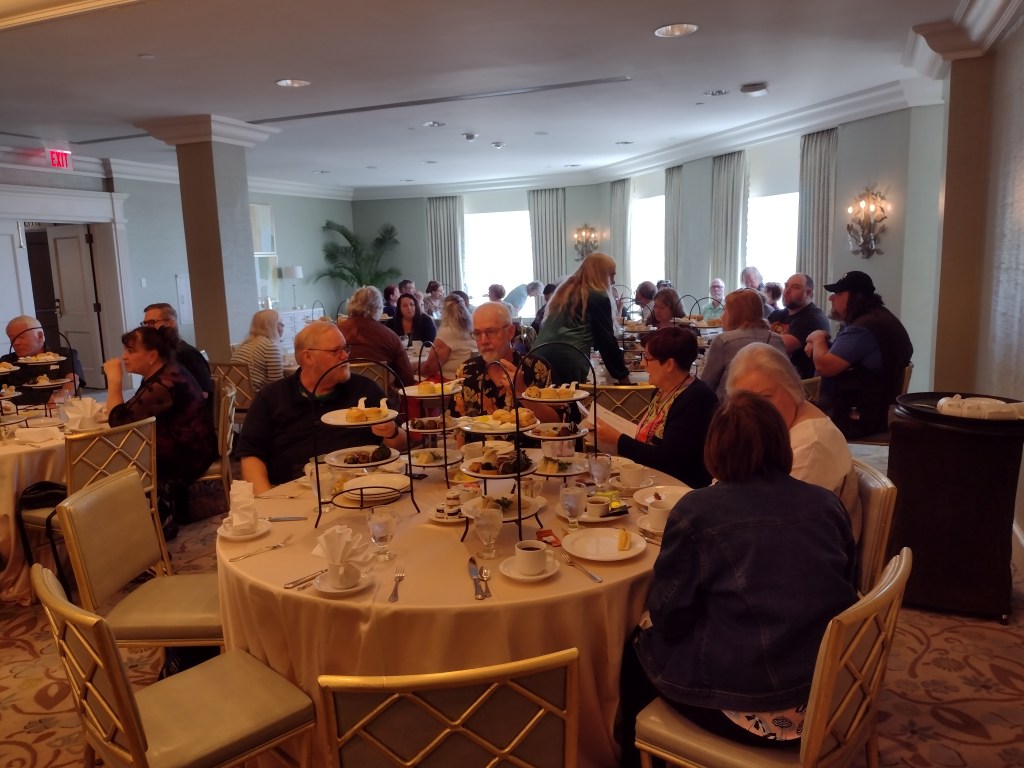
Writers for New Orleans Tea

Writers on the Panel for How to Make Your Blood Run Cold
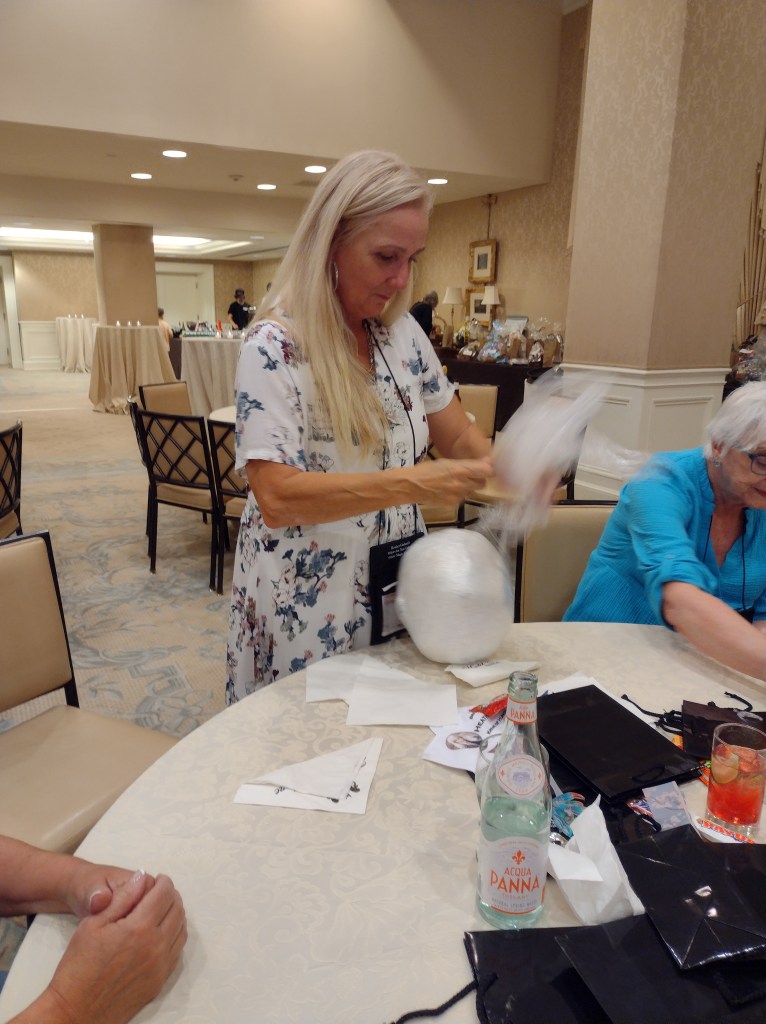
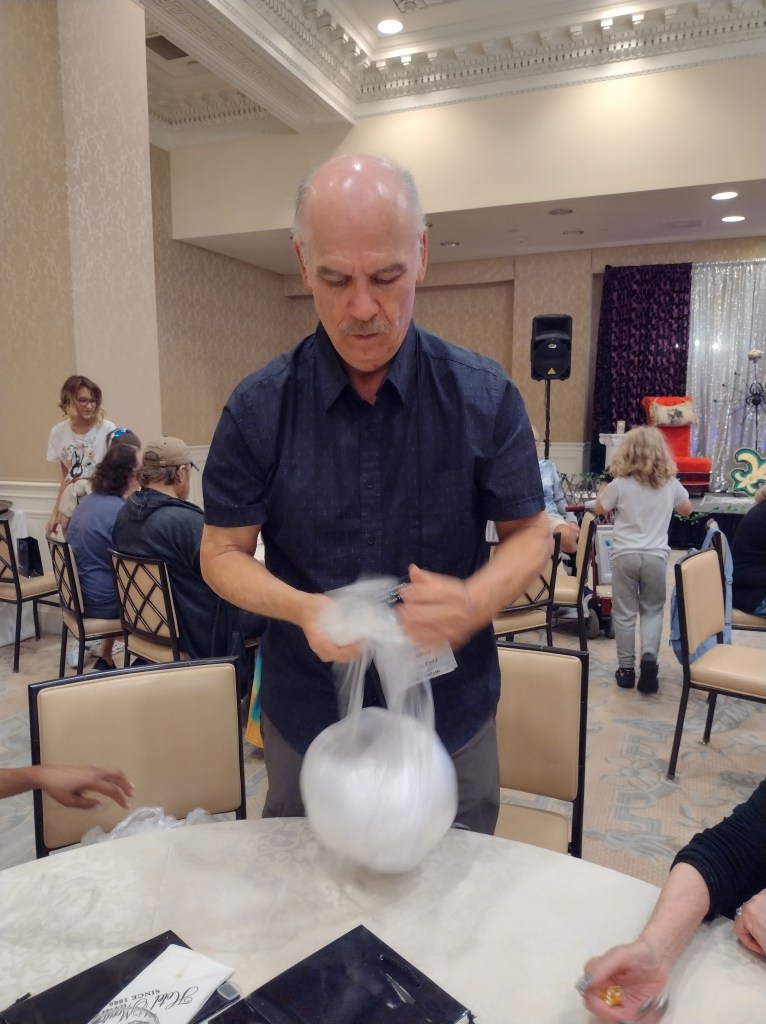
Game Night—unwrapping a ball for prizes
 Zeid's Mysteries