Research: Giving Your Work Authenticity
To weave your research into your story, focus on when the research answers the six wh questions; who, when, what, where, why, and how.
Ensure your source is credible. If a number is used, such as the percentage of cases, make sure you have a credible source for that data. I recommend citing the source, maybe in a conversation between the characters.
Be careful of using acronyms, jargon, and slang of the era or group. One way to define these is have a conversation between the character who knows the language and a character who is unfamiliar with the language.
The amount of time spent on research should not keep you from writing. Remember, you need to answer the six wh questions, not discover everything about the topic.
Credible sources include research and academic articles in libraries, professors at universities, museum curators, and those working in the field you are researching.
Be careful about changing events, especially historical events, to fit your story. There is artistic license which is different from being delusional.
For learning more about police work, try joining a citizens’ academy with a local police agency, ride-a-longs with patrol units, and Writers Police Academy.
Make ‘em Laugh: Wise-Craken’ Through Crime
Everyone is funny in his or her own way. We all have quirks. It’s innate, it’s the way a person looks at life.
Humor can be a defense mechanism. It often comes out the situation and how the character reacts to the situation.
Humor is about timing.
It is difficult to center a story on a person who is silly, funny, or strange. It has happened. Look at the TV series The Adams Family, The Munsters, The Beverly Hillbillies, and The Big Bang Theory. However, the humor comes from the characters’ perception of the situations.
Cozies do not have to be funny.
You can’t please everyone all the time. While you should be sensitive about issues, don’t be afraid by what others might think. Reading your humor out loud to others is a good way to test the humor to see if it’s appropriate. You can also use the read aloud function in Word. (This function is found under the Review tab.)
Animals can add humor to the novel.
Remember, every chapter should have a clue, as well as drama, action, move the plot along.
There are times when humor is not appropriate. Some topics that cannot be used are child abuse, animal cruelty, sexual abuse, and graphic violence.
Many novels, especially series, can have running gags, such as being a terrible driver and aways having a traffic accident or having a soft spot for rescuing stray cats.
Beyond the Conference: Sharpen Your Skills, Elevate Your Craft, Get Published
This was basically a pitch for Outliers Writing University, but they had several good suggestions.
The key to the writing community is the friends you make, many of them stay with you throughout your writing career, and they can be helpful to your career.
Also, your writing friends understand the issues you have and are supportive. They can also be supportive with other life problems.
Look for supportive groups such as writing groups. Find one that is supportive and provides constructive criticism. But don’t let criticism and writing groups take away from your writing.
Be aware of groups that are extremely negative. If the group isn’t helping you, then leave the group. Negative energy is not good.
You can join writing groups via the internet. On-line friends are useful.
Joining professional groups, such as Mystery Writers of America or Sisters in Crime, to gain access to other professionals who can help you.
Even though you’re published, it doesn’t mean you can’t benefit from writing groups. You can always learn more.
Find people you mesh with. People’s personalities are an issue. It helps if you find others who are at your same level or maybe a bit more advance, so that you can learn from them.
Domestic Suspense: How Well Do You Know Your Neighbor?
Real people can provide inspiration for characters in your novels. Many writers use bits and pieces of characteristics of real people. Sometimes observations of people around you can lead to interesting character developments.
Family secrets are a good source for character development and suspense. Family problems can make characters do bad things.
You can use people’s habits and personalities for inspiration.
Don’t focus on making the characters likeable. Make them real people the reader would actually run into.
You can avoid people claiming the character is based on them by giving them a trait no one wants. It’s called “the small penis role.” State the character had a bad trait such as a small penis or a lopsided nose, something no one would want to claim. That way, you can say the character is not based on a certain individual.
Domestic suspense uses things we don’t know about the neighbors or friends.
Suspense is greater when it’s personal to the character and the reader can feel the same fear as the character.
The greatest threat is the family members or people in your home. Think of Gaslight.
Suspense is scarier when it comes from people you trust, not really knowing the true nature of the person.
Domestic abuse: There is a great deal of denial from the victim and the family. They put up a false front. The abuser is hollow inside or has a violent nature
Victims often have feelings of loss or grief when leaving abusive situations. A good example is when people leave cults or abusive family situations. Victims have difficulty seeing the evil in villains/the abuser.
Secrets are vital to domestic suspense. Characters fantasize about killing others that they don’t like.
People are naturally nosey. They want to know what happened, why, who, etc. A good technique is focus on how characters react when they discover the secrets of others.
Characters need to make bad decisions to move the plot forward. Give characters reasons for making bad decisions.
Publishing Undercover
Publishing is a business populated by non-business people.
Publishing may seem like a wall or a world of gatekeepers, but these gatekeepers are necessary. Most of the time, publishers see the same thing.
Editors and publishers are looking for something original, something they haven’t read before. They look for books they love, not just like it, but love the story.
Editors and publishers want to help writers. They look for writers they can connect with.
Publishing makes a lot of noise on social media and who is getting great deals. Ignore this. It tends to be discouraging to those who are still working to make it.
Writing is an art form, and it takes a lot of work and practice. Writers need to work on it continuously.
There is no clear path to getting published. Writing goes through a lot of editing—it’s a long process.
Don’t wait for the muse or to be inspired. Learn to write when you have nothing to say. Just write and figure out the details later.
The P.I.: A Different Breed of Character
There is a professional group called the P.I. Writers of America.
Classic P.I. stuff is he, or she, goes up against corrupt law enforcement or a government agency. Be careful not to describe local agencies. The police or government agency protect the corruption and those involved.
Classic P.I. stories have sex scenes, but the sex scene needs to further the plot. Make sure it is necessary for the story.
P.I.s can impersonate someone. The police can’t unless they are working undercover.
Because a P.I. is not a cop, people will tell him, or her, things they would tell the police. A good P.I. has excellent interpersonal skills to get people to talk.
P.I. cannot make an arrest. The idea of a citizen’s arrest is no longer valid. You can detain a person until the police arrive, but if the person gets up and leaves, you cannot physically restrain that person unless there is a danger to you or others. P.I.s collect evidence and turn it over to the police.
Usually, the P.I. has a personal vendetta or desire to solve the case and find the criminal/killer.
Many times, explaining why the person is a P.I. can add to the story. This often involves a personal tragedy.
The character needs a skill set to become a P.I., usually a police background or some other job that provided the skills
Many P.I.s have battered armor; he or she has a shady past such as a criminal past.
P.I.s are usually morally ambiguous. They have their own moral code of what is right and what is wrong.
P.I.s don’t have to be heroic. They can run and hide from dangerous characters or situations.
P.I.s can refuse a case.
P.I.s often have difficult relationships with police agencies, but they may have a friend or a contact with a police officer who will help them.
Robert Parker’s novels are good examples of P.I. novels.
Marketing and Promotion: Podcasts, Websites, Social Media, and More
It’s important to realize that publicity is earned exposure, such as having an organization post something about you, and marketing is paid exposure, such as taking out an ad in a publication.
The attention you get is quick, so don’t let small numbers discourage you. Do all that you can do comfortably.
Don’t shotgun marketing; do it in an organized way. Have a plan.
If you do a podcast, you can remind everyone about it every so often such as once a month or every two months. If you do a podcast, post it on your website and social media. Keep sharing the information.
How do you contact people about doing a podcast? – be personal. “Dear (name), I’ve listened to your podcast, and I like it because . . .” When you email them, don’t focus on promoting your book. Instead, focus on getting to know the host and topics you share with them.
Stay within your comfort zone, such as a website and a newsletter. Consistency is important.
Posting on social media is okay, but not very effective. It doesn’t hurt but realize it doesn’t generate sales.
One thing that helps is be a good literary citizen and help promote other authors and events.
Don’t start your newsletters with promoting your book. Your readers are more interested in you as a person (what you are doing, where you are going, your daily life and especially pets).
To prepare for a podcast, be ready to have a conversation. It helps if the host gives you some idea of what will be discussed. Always be camera ready for a podcast. Always have your book ready to show the audience. Make sure your background doesn’t distract from you.
Research the podcast. Try listening to one or two of the podcasts. Realize the host may not have read your book. When doing a podcast, remember there is always a hot mike. Anything and everything you say will be recorded.
Social media is not a good way to sell books. Social media is controlled by algorithms. Post on social media if you like it. However, social media is a good way to join the writing and reading community. Help build the community by supporting your fellow writers and posting uplifting comments on other posts. People really like funny posts and animal posts.
Personal experience: Facebook does NOT have customer support. If you get kicked off of Facebook, they don’t have a way for you to contact them and ask about the problem.
Look up authors who are writing stories similar to yours. See what they are doing. It’s okay to steal ideas from others.
Join special interest groups on Facebook such as “Historical Fiction Writers”.
Facebook is not good for discoverability while Instagram may be good.
Personal experience: I find joining alumni groups (high school, college, and military units) a good way to reach out to others who may purchase your books. They will definitely promote you by telling their friends and family about you.
If you wish to hire a publicist, research the person and check out that person’s website. Publicity is an art; there is no formula. Hiring a publicist is an investment. Make sure you can work with that person. Furthermore, you will still have to do your own marketing.
Blurbs are good when they are on a site such as Goodreads. But readers want to know what the book is about. Blurbs on the book cover don’t let the reader know what the book is about.
Personal experience: I post the first chapter of my novels on my website so that readers can tell if the story will interest them or not. Many writers post the first chapter of their next book at the end of their current novel as a way to entice the reader to buy the next book.
Bookstores like to support writers, but they want a lot of people to come. Setting something up with several writers works a lot better than having just one author. One advantage is the bookstore promotes it and so do each writer.


A scene along the river in New Orleans.

One of the famous street cars in New Orleans.
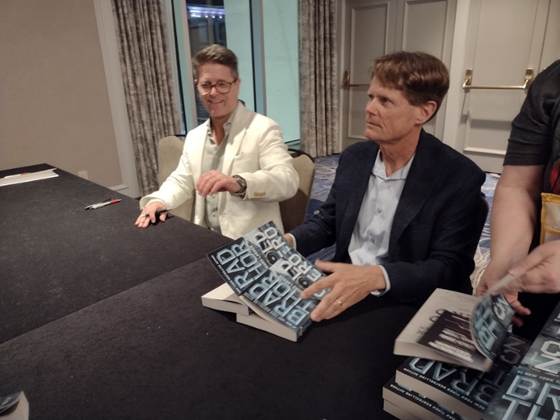
Ward Larson (right) and Brad Thor (left) signing their latest novel.

My book display at the Discovery Zone at Bouchercon 2025.

Here I am at the Discovery Zone at Bouchercon 2025.

I had to get a photo at Bouchercon for Facebook.

Panel shot of Beyond the Conference. Write, Learn, Connect.

Panel shot of Beyond the Conference. Write, Learn, Connect.

Authors at a book signing.

The hospitality suite.

My friend Michael Rigg and I at the Second Line Parade to the Opening Ceremony.

Getting ready for the Second Line Parade.
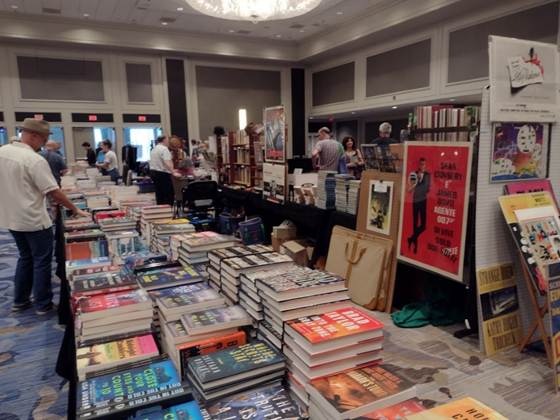
The book store where we had our books for sale.
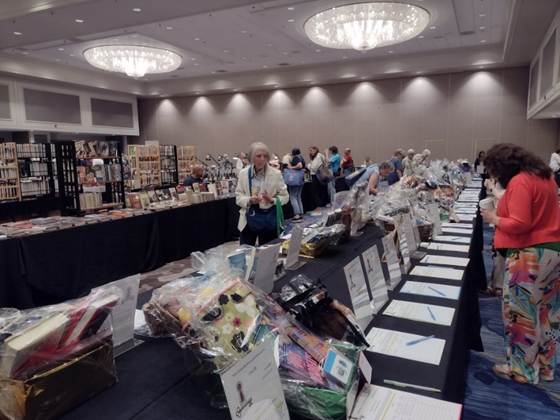
The book store and silent auction.

Authors at a book signing.
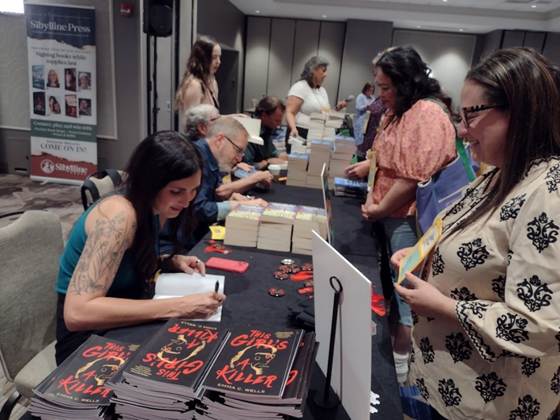
Authors at a book signing.

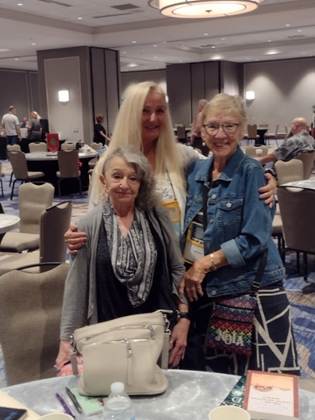
My friends Traci Hall, her mother, and Cherry Weiner socializing in the hospitality suite.


Another book signing. There were several of these each day.

Stephen and I getting ready for speed dating.

Here we are after our panel on Research: Giving Your Work Authenticity.
 Zeid's Mysteries